By Amos Dzege
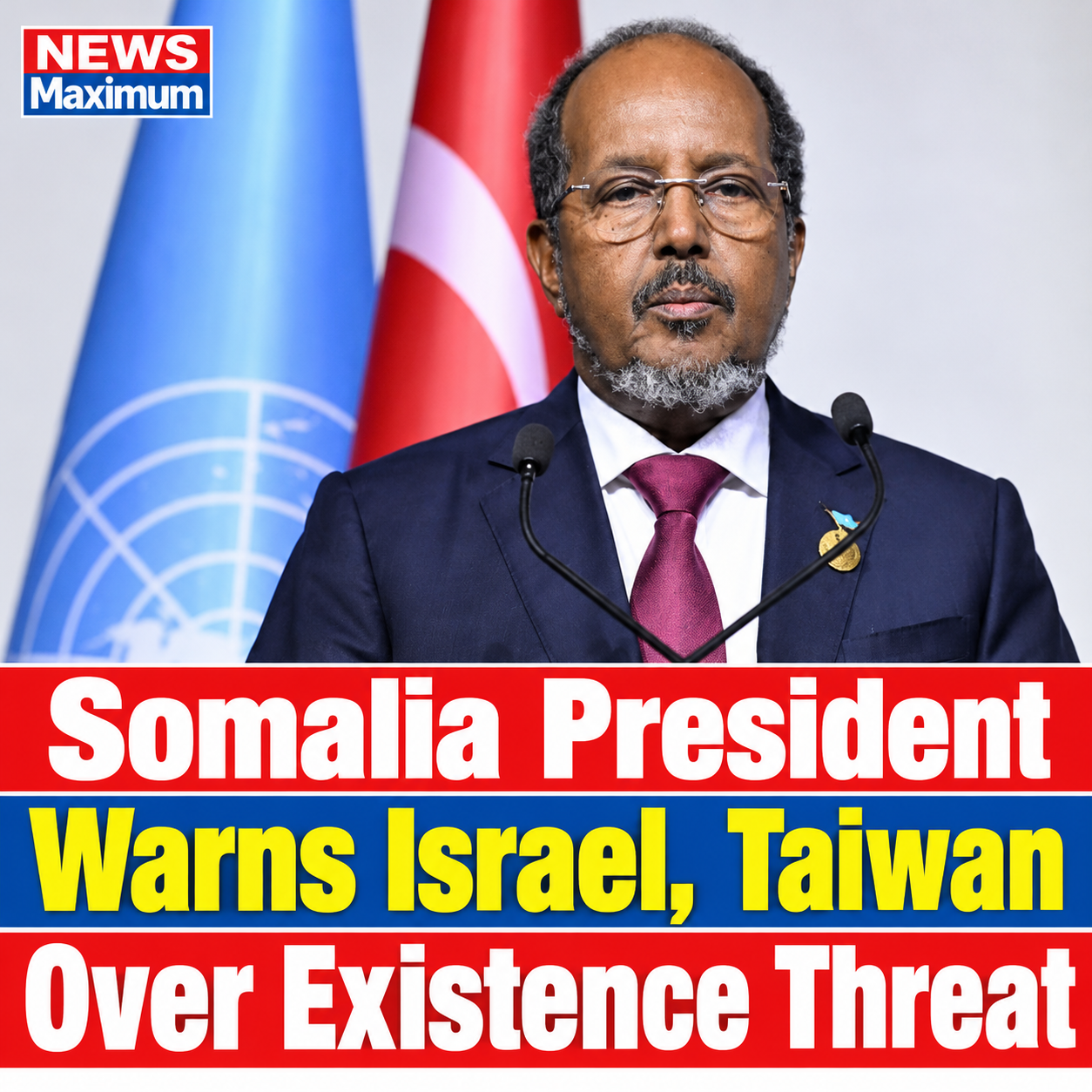
Somalia’s growing diplomatic confrontation over the future of Somaliland has taken a sharper turn after President Hassan Sheikh Mohamud publicly identified Israel and Taiwan as threats to his country’s sovereignty and continued existence.
The president made the remarks on Sunday, November 15, 2026, while addressing a ceremony to mark the launch of construction of Somalia’s National Defence University in Mogadishu, the country’s capital. His comments have drawn attention to the increasingly sensitive relationship between Somalia and countries maintaining ties with Somaliland.
Mohamud specifically accused Taiwan of threatening Somalia’s existence and described Israel as a threat to the country’s statehood. He also stressed that his administration knows which countries stand with Somalia and which do not, in an apparent reference to the diplomatic disagreements surrounding the breakaway region.
The president’s statement comes amid heightened tensions following Israel’s recognition of Somaliland in December 2025, making it the first United Nations member state to formally recognise the region as an independent country. The development was strongly opposed by the Somali government, which maintains that Somaliland remains an inseparable part of Somalia.
Somaliland, located in the Horn of Africa, declared independence in 1991 following the collapse of Somalia’s central government. Although it has operated its own administration, security institutions and political structures for decades, it has historically struggled to secure widespread international recognition.
Taiwan has also maintained close relations with Somaliland, with both sides establishing representative offices in 2020. Their relationship has developed through diplomatic engagement and cooperation, particularly as Taiwan seeks to strengthen its international partnerships.
For Mogadishu, these relationships represent a challenge to its territorial integrity because the Somali government does not recognise Somaliland’s independence. Its position is that international engagement with the region should not undermine Somalia’s internationally recognised borders.
The president’s remarks also highlighted Somalia’s growing relationship with China, which he described as one of the country’s closest partners. Beijing is financing the construction of the National Defence University, the facility whose groundbreaking ceremony provided the setting for his controversial statement.
The institution is expected to strengthen the professional and strategic capacity of Somalia’s armed forces by providing military education and specialised training for officers. The project will also include a hospital for members of the Somali military.
Defence Minister Ahmed Moallim Fiqi was among the officials involved in the event. He welcomed China’s contribution, describing the university as an important step towards rebuilding the intellectual, professional and institutional capacity of the Somali National Army.
China’s involvement is particularly significant because Beijing strongly supports the principle of one China and opposes Taiwan’s claim to separate statehood. Somalia, meanwhile, has consistently backed China’s position while insisting on the territorial unity of its own country.
Beyond the international diplomatic dispute, Mohamud also used the occasion to address Somalia’s internal political disagreements. He criticised opposition leaders for what he described as their attempts to seek solutions to the country’s political problems through foreign governments rather than resolving their differences through negotiations at home.
He urged opposition politicians to return to the negotiating table, arguing that disagreements over the country’s political future should be addressed through dialogue.
The latest remarks come at a difficult period for Somalia, where disagreements between the federal government and opposition figures over political arrangements and the country’s electoral future have continued to generate tensions.
Mohamud had returned to Mogadishu on Sunday after attending the United Nations COP31 climate conference in Antalya, Türkiye. During the conference, he also raised concerns about the potential impact of an exceptionally strong El Niño weather event, warning that flooding could disrupt the lives of millions of people in southern Somalia.
His latest comments are likely to add another dimension to the diplomatic disagreement involving Somalia, Israel and Taiwan, particularly as Somaliland continues to pursue stronger international recognition.
The positions of Israel, Taiwan and Somaliland on the president’s latest remarks will be important in determining whether the controversy develops into another round of diplomatic exchanges. However, the central disagreement remains Somalia’s determination to preserve its territorial integrity against international moves it believes could strengthen Somaliland’s independence.