

By Amos Dzege
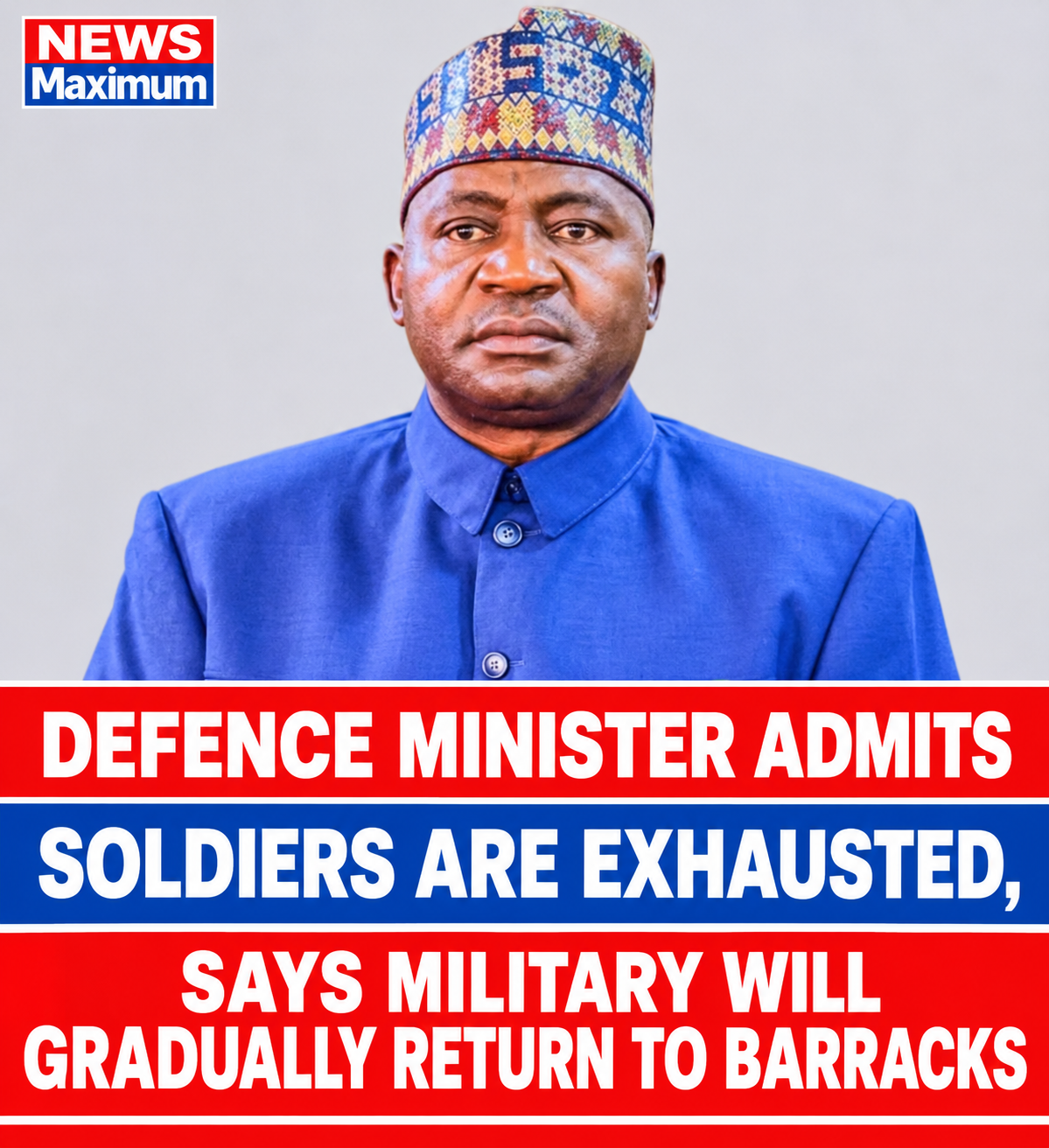
Minister of Defence, General Christopher Musa (retd.), has acknowledged that Nigerian soldiers are becoming overstretched and exhausted due to prolonged deployments on internal security operations across the country, saying the military will gradually withdraw from routine policing duties as the Nigeria Police Force strengthens its operational capacity.
Musa disclosed this on Thursday, November 5, 2026, while speaking at the Abuja Roundtable themed “Promise to Proof: The Renewed Hope Conversation,” organised by the APC Progressive Strategy Roundtable.
The defence minister admitted that the increasing involvement of the military in internal security responsibilities had placed considerable pressure on personnel, who are frequently deployed across different operational theatres for extended periods.
According to him, the armed forces are supporting the police in building their capacity to handle domestic security challenges, with the ultimate objective of allowing soldiers to return to their primary military responsibilities.
Musa explained that although the military could constitutionally intervene when security situations exceed the capacity of the police, the current level of military involvement in routine internal security operations had become excessive.
He said the government was discussing measures with police leadership to improve policing capacity and reduce the country’s dependence on military deployments.
The minister disclosed that he had recently attended a security meeting involving the Inspector-General of Police and other relevant officials to assess the country’s security situation and identify ways to strengthen police operations.
“We’re looking at how we can enhance the police, because my men are tired. I can tell you for free,” Musa said.
He added that the military was already assisting the police with capacity-building efforts, expressing optimism that improved recruitment and operational effectiveness would eventually reduce the need for soldiers to perform responsibilities traditionally handled by the police.
“Gradually, we too will start pulling out and going back to the barracks so that we can have time to rest,” he stated.
Musa further highlighted the personal challenges facing military personnel as a result of continuous deployments, explaining that some soldiers spend years moving between different operational assignments with limited opportunities to reunite with their families.
He illustrated the situation by explaining that a soldier could spend about two years in one operational location before being transferred to another theatre, including the North-West, leaving some personnel with little time to attend to their families.
“You will spend two years in one place, then you are moving to the northwest. Sometimes you don’t even see your family. It’s not like they’re enjoying it, but there’s a necessity that we have to be there,” he said.
The minister’s remarks underscore the government’s intention to strengthen the Nigeria Police Force through improved manpower, training, equipment and institutional reforms to enable it to take greater responsibility for internal security.
Musa maintained that military involvement would remain necessary in situations where threats exceed the operational capabilities of the police, but stressed that prolonged deployments should not become a permanent replacement for effective civilian policing.
He also advocated the reintroduction of tollgates on major highways, supported by modern surveillance and vehicle identification technology, arguing that such facilities could help security agencies monitor movements and tackle kidnapping, banditry and other criminal activities.
The proposed gradual withdrawal is expected to depend on the police’s ability to improve its manpower and operational capacity, while the military continues to address security threats requiring its specialised capabilities.