
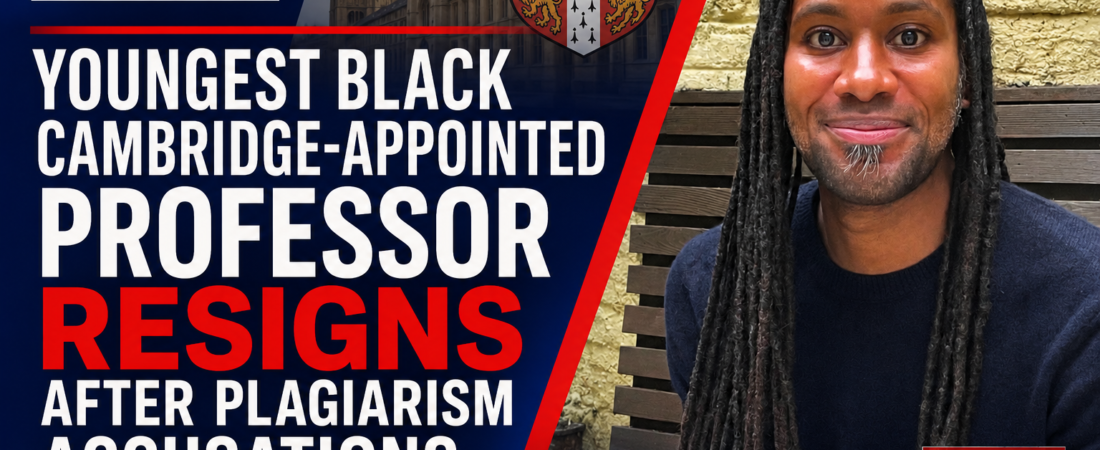
Professor Jason Arday, who made history as the youngest Black person ever appointed to a professorship at the University of Cambridge, has resigned following intense scrutiny over allegations of plagiarism and questions surrounding some of his past claims. Arday, who was born in London to Ghanaian parents, became Professor of Sociology of Education at Cambridge in 2023 at the age of 37.
At the centre of the controversy are allegations concerning Arday’s PhD thesis, completed at Liverpool John Moores University (LJMU). Critics alleged that parts of the thesis contained material similar to previously published academic work. However, LJMU investigated the plagiarism allegations and cleared Arday of academic misconduct.
The controversy later widened to include questions about some of Arday’s previously reported achievements. These included claims relating to extraordinary marathon-running feats and an alleged appearance in the British documentary series Seven Up!, which first aired in 1964, years before Arday was born. Questions have also been raised about some charitable fundraising achievements and other accomplishments attributed to him.
Amid mounting media attention and public scrutiny, Arday stepped down from his position at Cambridge. He has denied deliberately plagiarising the work of others and indicated that the sustained pressure surrounding the allegations had taken a significant toll on him and those close to him. His resignation, therefore, has not been presented by him as an admission of wrongdoing.
The controversy has sharply divided opinion. Some critics have called him a “DEI (Diversity, Equity and Inclusion) poster boy,” insisting that he was appointed merely because he is Black and to make the University of Cambridge appear more racially inclusive. They also believe the allegations raise legitimate questions about academic integrity and whether Arday’s rise through academia was based partly on exaggerated or inaccurate claims. His supporters, however, argue that the level of scrutiny directed at him has become excessive, with some suggesting that race has played a role in the campaign against one of Cambridge’s most prominent Black academics.
The dispute has attracted considerable public attention and support for Arday, while Cambridge has faced questions about its appointment and verification processes. His departure represents a dramatic turn for an academic whose historic Cambridge appointment had previously been widely celebrated as an important milestone for Black representation in British academia.