NewsMaximum | News Analysis and Commentary | 21 September 2026
Donald Trump’s longstanding confrontation with the American media has entered a new phase, with restrictions on White House access prompting legal action and a collective response from major television networks.
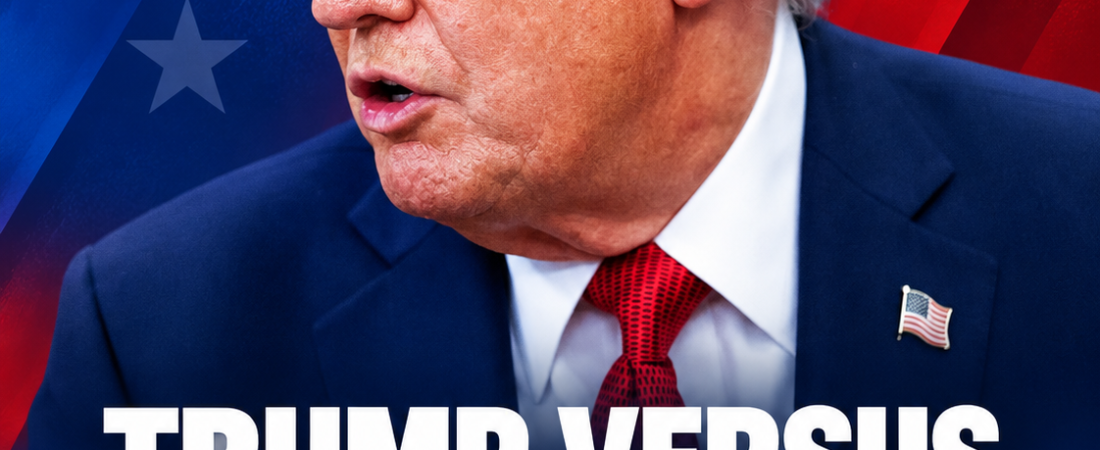
On Friday, September 18, President Trump announced that CNN, MS NOW—formerly MSNBC—and Politico would be banned from the White House, accusing them of publishing “fake news”. By Saturday, journalists from the three organisations were being denied entry, and the outlets said their teams’ press passes had been confiscated. Reuters
The dispute moved to court on Monday, September 21. The organisations sued the administration, arguing that the exclusion violated their constitutional rights. They are seeking an order restoring access, maintaining that government officials should not punish journalists because they dislike their reporting. These are the outlets’ legal arguments, rather than a final judicial determination. Associated Press
Trump, meanwhile, has defended his decision as a response to allegedly dishonest coverage. He insists that his target is “fake news” and has warned that other organisations could face restrictions. The accusation remains his stated justification, rather than proof that the banned organisations’ reporting is false. Reuters
The confrontation also disrupted the television press pool. Under this arrangement, networks rotate responsibility for filming presidential activities and share the footage. After CNN was blocked from its scheduled assignment, the participating networks—including Fox News, ABC, CBS and NBC—suspended pooled television coverage. This did not amount to a blanket decision to stop reporting on Trump. The Wall Street Journal
For someone who followed American news closely during Trump’s first presidency, the latest confrontation brings back familiar concerns.
As a voracious news consumer during that period, I often felt that I was watching two different versions of America. Much of the CNN and MSNBC commentary I encountered struck me as strongly critical of Trump, while Fox News and Newsmax frequently appeared more sympathetic to him.
That is my assessment of the coverage I watched, rather than a comprehensive study of everything those organisations broadcast. It would be too sweeping to claim that one outlet never acknowledges his achievements or that another always supports him.
Trump’s longstanding clashes with CNN, MSNBC and other critical outlets helped popularise the expression “fake news”, which he repeatedly used to challenge their coverage and rally his supporters.
The concern about media polarisation deserves discussion. When commentary repeatedly reinforces an audience’s existing loyalties, viewers can find it difficult to distinguish reporting from political advocacy. News organisations should face scrutiny over accuracy, framing and their willingness to correct mistakes.
Equally, criticism of media bias should not make government control over journalistic access acceptable by default. A president’s dissatisfaction with coverage does not, by itself, establish that the coverage is dishonest.
Fox News’s participation in the collective response is particularly significant in this context. Whatever differences exist between competing networks, access to presidential activities is a shared professional concern.
For NewsMaximum, the principle is straightforward: journalists should scrutinise political leaders, and audiences should scrutinise journalists. Neither scrutiny should depend on political loyalty.
What do you think: how should news organisations be held accountable for unfair coverage while preserving their independence to report on those in power?