By Amos Dzege
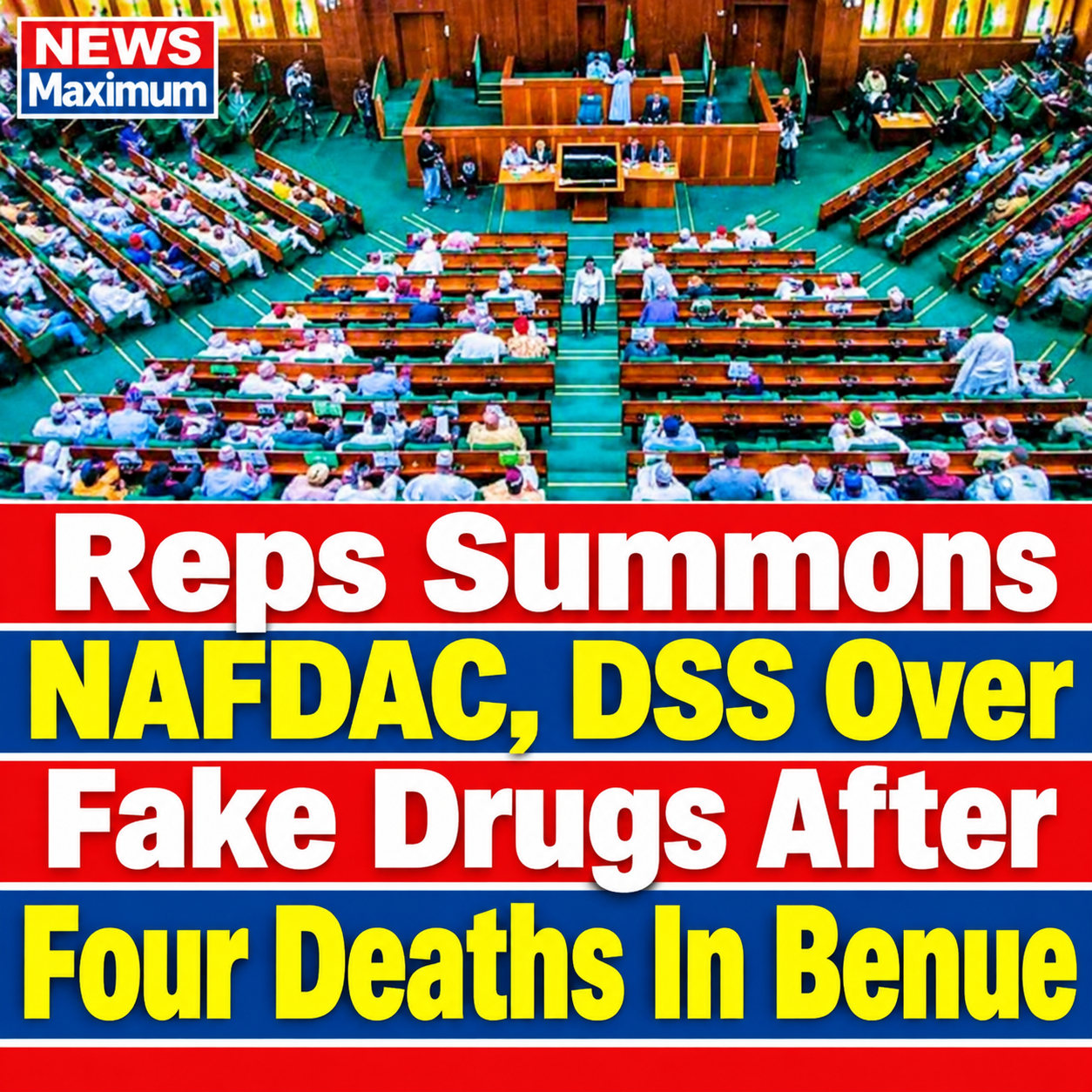
The House of Representatives has moved to investigate the circulation of suspected dangerous herbal medicines in Nigeria following reports that four people died and 11 others fell ill after consuming a herbal product allegedly sold to residents of Obi/Oju Federal Constituency in Benue State.
The incident has raised fresh concerns about the activities of unregulated medicine sellers and the ability of relevant government agencies to prevent potentially harmful products from reaching unsuspecting members of the public.
Consequently, lawmakers have resolved to invite the leadership of the National Agency for Food and Drug Administration and Control (NAFDAC), the Department of State Services (DSS) and the Nigeria Police Force to explain the measures being taken to tackle the circulation of fake drugs, unregistered herbal medicines and adulterated drinks across the country.
The resolution was reached during Wednesday’s plenary session, November 18, 2026, following a motion of urgent public importance sponsored by David Agada, the lawmaker representing Obi/Oju Federal Constituency of Benue State.
While presenting the motion, Agada told the House that the incident began on October 31, 2026, when three individuals identified as Muhammad Sani Adamu, Musa Alhaji Kala, who reportedly claimed to be from Sokoto State, and Muhammad Sule, said to be from Bauchi State, allegedly introduced and distributed a herbal medicinal product within the constituency.
According to the lawmaker, the individuals marketed the product to residents as a remedy for typhoid fever, waist pain and other ailments.
Several residents reportedly purchased and consumed the preparation but developed serious health complications within hours, prompting emergency visits to different hospitals.
Agada identified the four people who reportedly died as Awugo Joseph Oyije, who died on November 2; James Ogah Onma, who died on November 4 after being referred for further medical treatment; Ode Friday Ogah, who died on November 5; and Agi Edugbeke, who died on November 11, 2026.
He further disclosed that 11 other residents were affected and were receiving medical attention. They were identified as Otumala Ochele, Binta Sule, Onu Oboh, Adoga Onu, Upa James, Igbo Pius, Ochele Genesis, Otumala Amos, Uwa Baku, Ate Vivian Okpune and Roman Ehile.
Two of the affected residents were reportedly referred to hospitals in Makurdi, the Benue State capital, for further treatment.
The lawmaker warned that the number of people exposed to the suspected product could be higher because some residents might have consumed it without being identified or could be receiving treatment outside recognised health facilities.
He also raised questions about the product’s ingredients, source, manufacturing conditions, NAFDAC registration status, recommended dosage, safety and possible adverse effects, noting that these details had yet to be established.
Agada described the development as a serious public health concern, urging relevant authorities to investigate the circumstances surrounding the deaths, identify those responsible where wrongdoing was established and prevent further exposure to the suspected substance.
During deliberations on the motion, House Leader Julius Ihonvbere expressed concern that the growing circulation of counterfeit medicines and adulterated drinks had become a nationwide problem that NAFDAC could not effectively address without additional resources and personnel.
Ihonvbere said the agency had a workforce of approximately 2,000 employees, which he considered insufficient for monitoring the country’s extensive drug distribution network.
He argued that NAFDAC needed at least 10,000 personnel to carry out its regulatory responsibilities more effectively, warning that Nigerians would continue to face serious health risks if the problem was not urgently addressed.
He also proposed tougher punishment for individuals found guilty of manufacturing and distributing dangerous counterfeit products, suggesting that lawmakers should consider penalties ranging from life imprisonment to the death penalty.
Similarly, Ali Shettima, a lawmaker representing Yobe State, urged the House to extend its attention beyond the Benue incident and examine the wider circulation of fake medicines across the country.
He called for stronger supervision of herbal medicine producers and appropriate legislation to ensure that individuals found guilty of selling counterfeit or dangerous products were adequately punished.
However, another lawmaker from Yobe State, Fatima Talba, cautioned against addressing the problem without considering why many Nigerians patronise unregulated herbal medicine vendors.
She argued that some people resort to such products because they lack access to affordable and reliable healthcare alternatives, stressing the need for government to address the circumstances pushing residents towards unregulated treatment options.
Peter Uzoekwe, representing Anambra State, also proposed holding market leadership accountable for the circulation of counterfeit medicines, suggesting that executives of markets where such products were manufactured or sold should face consequences.
Meanwhile, Ismaila Haruna, who represents Toro Federal Constituency of Bauchi State, called for investigations into reports of men dying after allegedly using sexual performance-enhancing products, raising further questions about the enforcement of existing regulations.
At the conclusion of the debate, the House resolved to invite the heads of NAFDAC, the DSS and the Nigeria Police Force to brief its relevant committees on their efforts to investigate and address the circulation of fake herbal medicines and adulterated drinks.
The development comes despite existing Nigerian laws prohibiting the production, distribution and sale of counterfeit, adulterated, unsafe and unregistered regulated medicinal products.
The NAFDAC Act provides the agency with regulatory authority over the manufacture, distribution, sale and use of medicines, including herbal medicinal products, while other existing laws also prohibit the circulation of unsafe drugs and food products.
However, the Benue incident has brought renewed attention to concerns about enforcement, regulatory coverage and the activities of individuals who allegedly market unverified preparations as treatments for different illnesses.
As the House prepares to receive explanations from the relevant agencies, the circumstances surrounding the four reported deaths, the identity and source of the suspected herbal product, and the responsibility of those involved in its distribution remain matters requiring thorough investigation.