By Amos Dzege
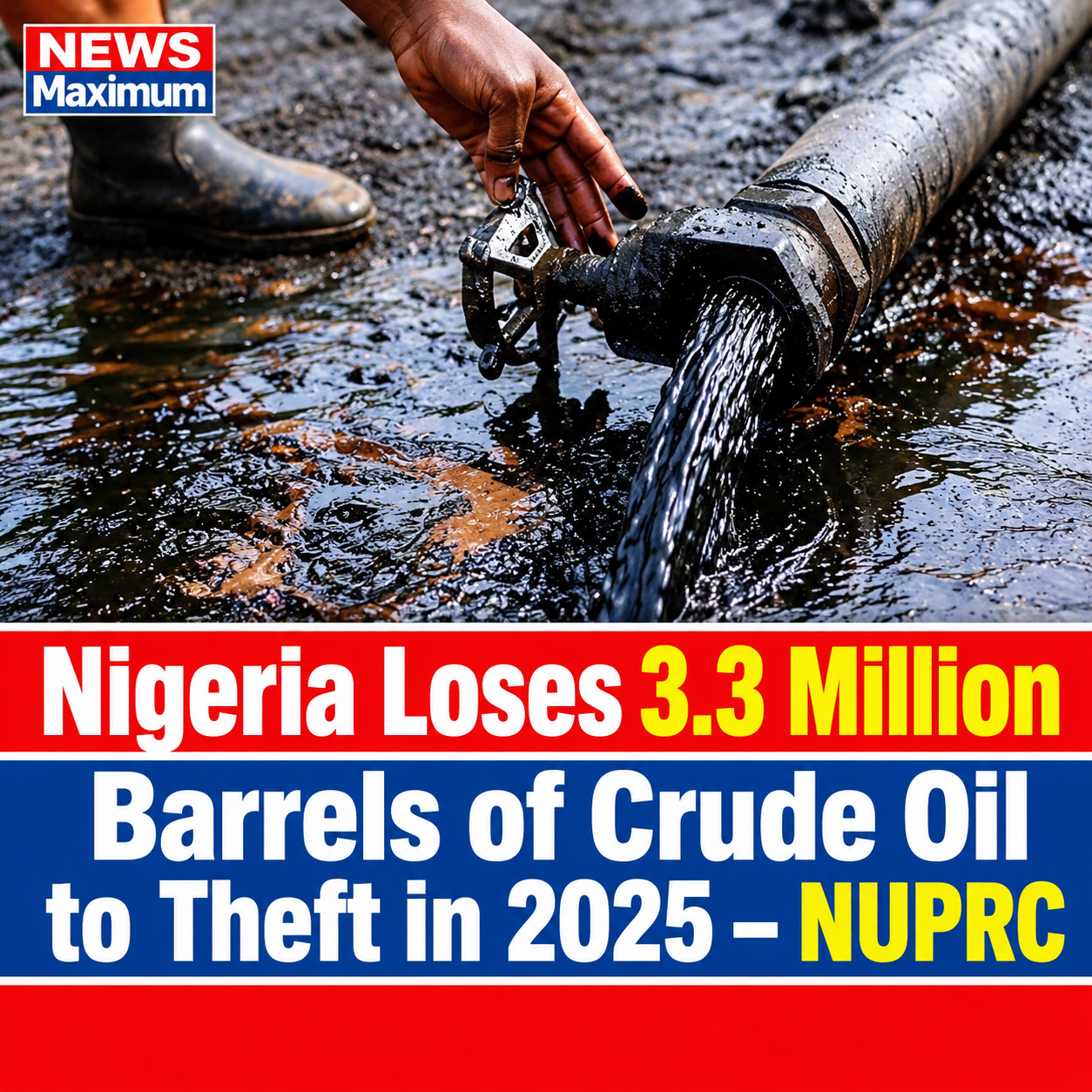
Nigeria lost approximately 3.3 million barrels of crude oil to theft in 2025, according to the Nigerian Upstream Petroleum Regulatory Commission (NUPRC), highlighting the persistent challenge of crude oil theft, pipeline vandalism and illegal activities threatening the country’s petroleum industry.
The reported losses underscore the difficulties facing Nigeria in protecting its oil resources despite ongoing government efforts to strengthen surveillance, improve pipeline security and curb illegal crude oil operations, particularly across the Niger Delta.
According to figures contained in the commission’s report, crude oil theft increased significantly towards the end of 2025, with the fourth quarter alone recording approximately 2.19 million barrels, representing 65.8 per cent of the total reported losses.
The figure was considerably higher than the 440,434 barrels recorded in the third quarter. The first quarter recorded 896,471 barrels, while the second quarter showed a negative figure of 200,400 barrels, reflecting excess volumes identified during reconciliation.
The disclosure comes amid concerns over the financial consequences of crude oil theft for an economy that depends heavily on petroleum exports for foreign exchange earnings and government revenue.
The NUPRC report also indicated that the commission’s oil and gas revenue collections declined by ₦2.14 trillion, dropping from ₦12.56 trillion in 2024 to ₦10.42 trillion in 2025, representing a 17.03 per cent decrease.
Despite the challenges, Nigeria produced approximately 541.08 million barrels of crude oil and blended condensate in 2025. Production figures stood at 132.70 million barrels in the first quarter, 137.69 million barrels in the second quarter, 137.45 million barrels in the third quarter and 133.23 million barrels in the fourth quarter.
The country also recorded 48.52 million barrels of unblended condensate production during the year.
Meanwhile, the report disclosed that the Nigerian National Petroleum Company Limited (NNPC) spent approximately ₦8.67 trillion on energy security interventions in 2025, compared with about ₦3.1 trillion in 2024. The expenditure was directed towards efforts to protect critical oil and gas infrastructure and support energy security.
The commission further recorded 357 oil spill incidents across the country during the year, with sabotage accounting for 49.5 per cent of the reported incidents, highlighting the continuing threat to petroleum infrastructure and the environment.
On other revenue streams, collections from gas flare penalties increased by 56.27 per cent, rising from ₦391.26 billion in 2024 to ₦611.42 billion in 2025. Signature bonuses also increased by 44.2 per cent, from ₦369.58 billion to ₦532.94 billion, while concession rentals rose by 61.1 per cent, from ₦23.71 billion to ₦38.19 billion.
However, the NUPRC generated ₦10.42 trillion against a projected revenue target of ₦16.54 trillion for 2025, representing approximately 63 per cent of the expected collection.
The persistent theft of crude oil, pipeline vandalism and illegal production activities remain major obstacles to Nigeria’s efforts to maximise its petroleum resources. Beyond the immediate financial losses, these activities undermine production capacity, discourage investment and weaken the country’s ability to fully benefit from its natural resources.
The latest figures have renewed concerns over the effectiveness of existing security arrangements around oil installations, pipelines and other critical petroleum infrastructure.
With crude oil remaining a major source of national revenue and foreign exchange, strengthening surveillance, improving security coordination and bringing those responsible for oil theft and pipeline sabotage to justice will remain critical to protecting Nigeria’s petroleum industry and improving the country’s economic performance.