


By Amos Dzege
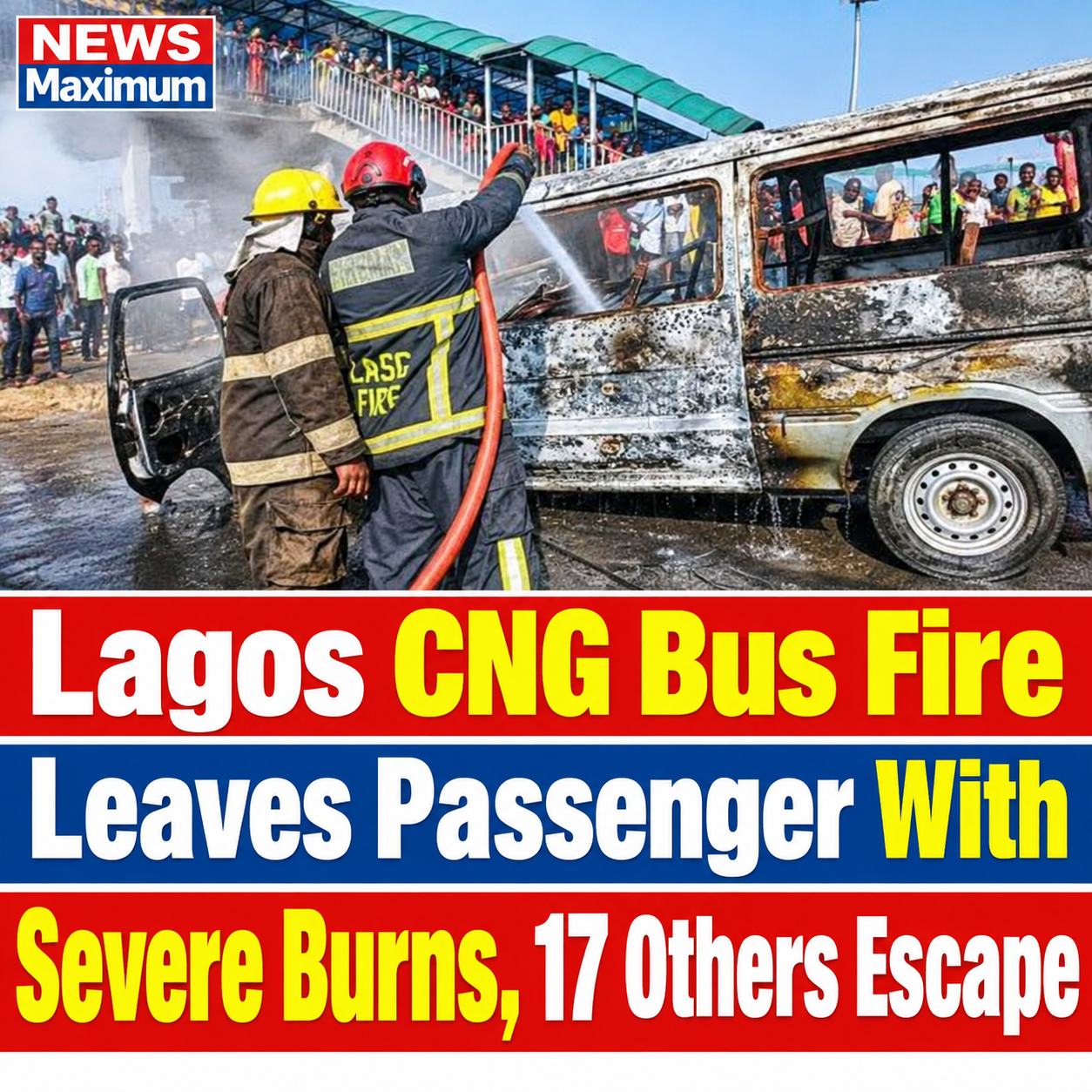
A journey that began along the Mowe-Ibafo corridor ended in a frightening emergency on Wednesday after a compressed natural gas (CNG)-powered commercial bus caught fire at Berger Bus Stop on the Lagos-Ibadan Expressway, leaving one passenger with severe burn injuries.
The incident has brought fresh attention to the safety of gas-powered commercial vehicles in Nigeria, particularly as the country continues to encourage the adoption of compressed natural gas as an alternative to conventional petrol and diesel fuels. Although 17 occupants escaped without injuries, the ordeal has raised concerns about how adequately such vehicles are inspected, maintained and prepared to handle emergencies.
The Lagos State Traffic Management Authority (LASTMA) disclosed that the vehicle, a Toyota Hiace with registration number EKY 798 YK, was carrying 18 people, including the driver, from the Mowe-Ibafo axis towards Lagos when it suddenly caught fire.
According to the authority, the outbreak triggered panic among passengers and other motorists using the busy expressway. LASTMA officials who arrived at the scene evacuated 17 occupants, while one male passenger seated towards the rear of the vehicle suffered severe burns.
The injured passenger was subsequently taken to the Lagos State Trauma and Emergency Centre at the Toll Gate for urgent medical attention.
Personnel of the Lagos State Fire and Rescue Service also responded to the incident, deploying firefighting equipment to bring the flames under control and prevent the fire from spreading. Officers attached to the Ojodu Police Division provided security and helped maintain order while the rescue and firefighting operations continued.
LASTMA General Manager, Olalekan Bakare-Oki, commended the agency’s personnel and other emergency responders for their intervention, describing their coordinated response as important in limiting the number of casualties.
He also urged commercial transport operators, particularly those running CNG-powered vehicles, to ensure that their vehicles undergo regular professional inspections. He stressed the importance of maintaining gas storage and delivery systems and complying with established safety requirements.
Beyond the immediate rescue, however, the incident presents another challenge for Nigeria’s expanding CNG transportation programme. While the alternative fuel is being promoted to reduce dependence on petrol and lower transportation costs, its wider adoption must be accompanied by effective safety monitoring, certified conversion procedures and proper maintenance.
Concerns about the risks associated with improperly installed or poorly maintained CNG equipment have surfaced in previous incidents across the country. Consequently, attention is increasingly turning towards the responsibilities of vehicle owners, conversion centres, regulatory agencies and transport operators in ensuring that safety requirements are not treated as optional.
For passengers who depend on commercial transportation every day, the assurance that a vehicle is safe should go beyond its ability to complete a journey. Regular technical checks, functioning emergency equipment, adequate driver training and clear evacuation procedures are essential safeguards.
Although the prompt intervention of emergency responders helped prevent a potentially larger tragedy in Lagos, the circumstances surrounding the fire also reinforce the need for closer scrutiny of CNG-powered vehicles operating on Nigerian roads. Establishing what triggered the outbreak and whether the vehicle met the required safety conditions would be important steps towards preventing a recurrence.