
By Amos Dzege
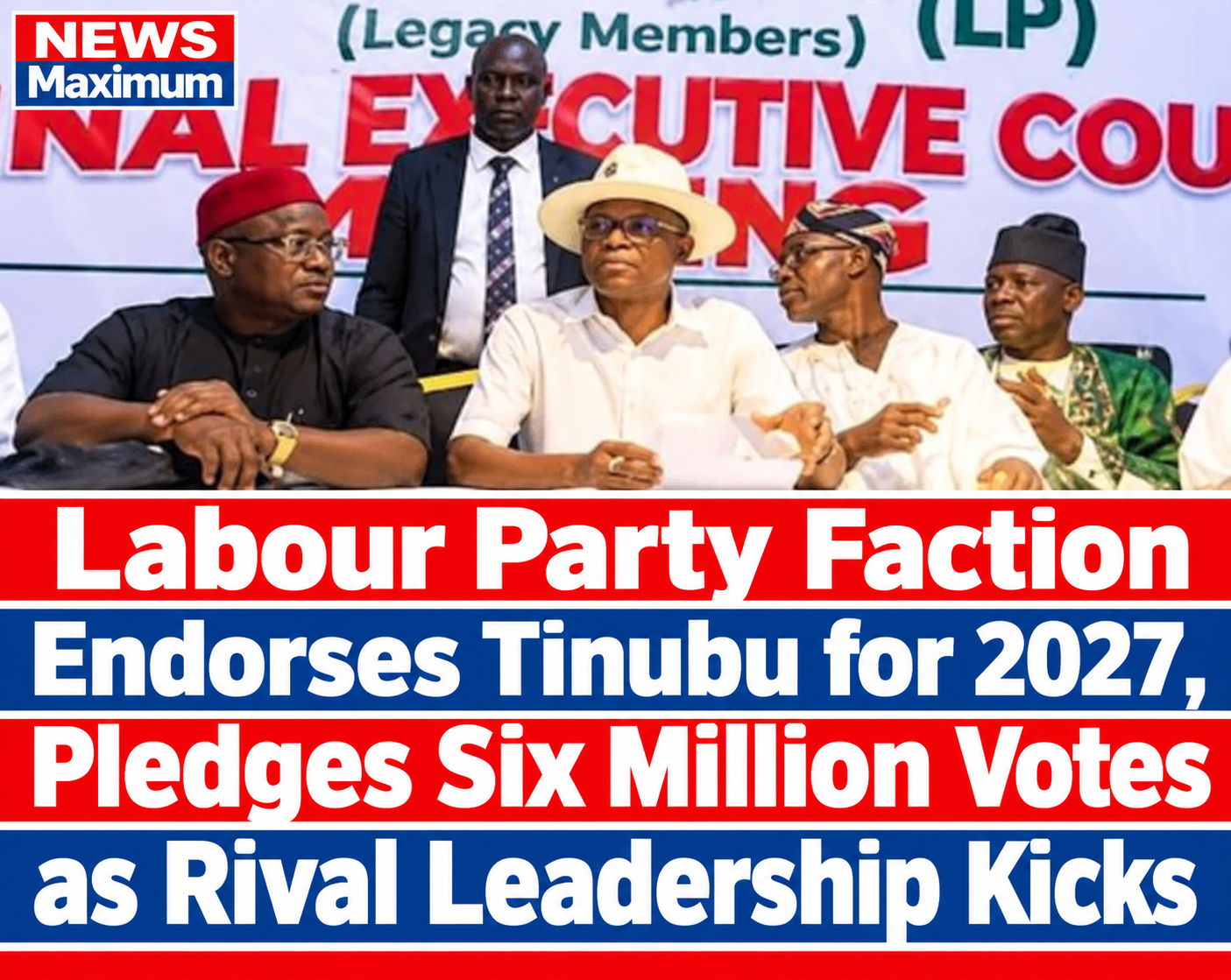
A faction of the Labour Party (LP) led by former National Chairman Julius Abure has declared support for President Bola Tinubu’s re-election bid in 2027, promising to mobilise at least six million votes for the incumbent president.
The endorsement was announced on Monday, November 23, 2026, during a National Executive Council (NEC) meeting held by the Abure-led faction in Abuja. The declaration has further exposed the divisions within the opposition party, particularly over its political direction ahead of the next general elections.
Speaking at the gathering, Abure described Tinubu as the most suitable candidate to lead Nigeria beyond 2027, citing what he considered the achievements of the president’s administration and his political experience.
He said the faction was prepared to deploy its structures across the country, including ward, local, state, regional and national leaders, to secure electoral support for Tinubu.
Abure declared that the group would deliver nothing less than six million votes to the president at the ballot box, insisting that winning elections required deliberate planning, organisation and effective mobilisation rather than public demonstrations and political rallies alone.
The former Labour Party chairman also ruled out supporting former Anambra State Governor Peter Obi, who contested the 2023 presidential election under the party’s platform, or former Vice-President Atiku Abubakar in the 2027 race.
He questioned Obi’s political capacity and competence, arguing that Tinubu had demonstrated stronger leadership experience and the ability to maintain political relationships over the years.
Abure also dismissed Atiku as an alternative, maintaining that the incumbent president remained the faction’s preferred candidate for the next presidential election.
Other prominent members present at the meeting included former South-West National Vice Chairman of the party, Abayomi Arabambi; Chairman of the Labour Party State Chairmen Forum, Ceekay Igara; Deputy National Chairman, Ayo Olufemi; and former National Legal Adviser, Kehinde Edun.
A video from the gathering showed some of the participants singing President Tinubu’s popular campaign anthem, ‘On Your Mandate’, as they publicly expressed support for his second-term ambition.
The endorsement followed an earlier declaration by Kennedy Ahanotu, who had served as the Labour Party’s factional presidential candidate. Ahanotu reportedly withdrew from the 2027 presidential race the previous week and announced his support for Tinubu, pledging to mobilise voters for the president.
However, the latest political development has been strongly rejected by the rival leadership of the Labour Party led by Nenadi Usman.
In a statement issued through its National Publicity Secretary, Ken Asogwa, the Usman-led leadership described the Abuja gathering as an unauthorised meeting allegedly organised by former party members and individuals seeking to create confusion within the organisation.
The leadership maintained that no recognised organ of the party had scheduled a National Executive Council meeting for Monday and urged Nigerians, party supporters and the media to disregard any resolution or communiqué emerging from the gathering.
It also called on the police and other security agencies to investigate what it described as impersonation, alleging that those behind the meeting were unlawfully using the party’s name and identity.
The Usman-led faction further disclosed that it had petitioned the police, requesting an investigation into the gathering and the individuals involved.
The dispute has once again highlighted the deep divisions within the Labour Party, which became one of Nigeria’s most prominent opposition platforms following Peter Obi’s strong showing in the 2023 presidential election.
The party has since experienced prolonged leadership disagreements, with rival groups laying claim to its structures and political authority.
With the 2027 general elections approaching, the Abure faction’s decision to support Tinubu represents a significant political realignment, although the endorsement remains disputed and does not amount to an official endorsement by the entire Labour Party.
The development also raises questions about how the party’s internal disagreements will affect its ability to maintain a united political position and participate effectively in the next general elections.