By Amos Dzege
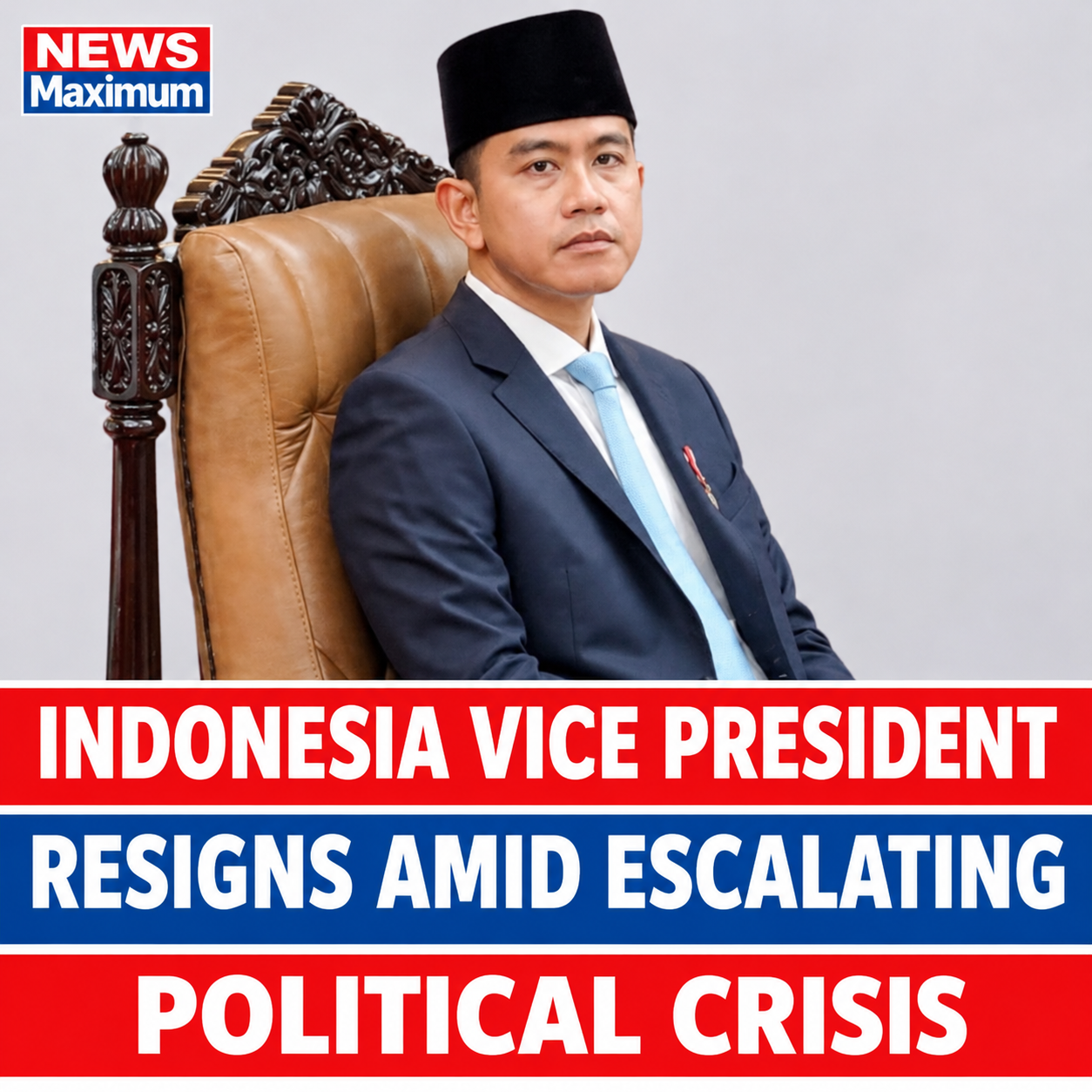
Indonesia has been thrown into fresh political uncertainty following the resignation of Vice-President Gibran Rakabuming Raka, whose departure has exposed growing divisions within the country’s political establishment and raised questions about the future of President Prabowo Subianto’s administration.
Gibran, 39, formally submitted his resignation letter on Thursday, November 12, 2026, to the leadership of the People’s Consultative Assembly (MPR) in Jakarta, bringing an unexpected end to his tenure as the country’s vice-president, a position he assumed in October 2024 alongside President Prabowo.
The resignation followed weeks of controversy surrounding his educational qualifications, after separate court decisions raised serious questions about whether the documents he presented during the 2024 election satisfied the legal requirements for occupying the country’s second-highest political office.
According to MPR Speaker Ahmad Muzani, Gibran personally delivered his resignation letter during a meeting with the assembly’s leadership that lasted approximately 20 minutes. Muzani confirmed that the vice-president had also submitted an identical letter to President Prabowo.
In explaining his decision, Gibran reportedly stated in his resignation letter that he was stepping aside voluntarily in the interest of the nation and to ensure the smooth functioning of the government.
The development came just hours before lawmakers were expected to consider a petition seeking his impeachment. Approximately 120 legislators drawn from eight political parties had backed the initiative, arguing that Gibran no longer satisfied the constitutional requirements for remaining in office.
The controversy centres on Indonesia’s election law, which requires presidential and vice-presidential candidates to have completed senior high school or an equivalent level of education.
Gibran, the eldest son of former Indonesian President Joko Widodo, had relied on an educational equivalency certificate connected to his studies in Australia when registering for the 2024 presidential election.
However, the country’s Constitutional Court and Supreme Court issued separate decisions in October questioning the adequacy of the educational documents presented in support of his eligibility.
On October 6, the Constitutional Court addressed a challenge concerning his qualifications, noting that there was insufficient convincing evidence establishing that he possessed a foreign diploma equivalent to the required senior high school qualification.
The controversy intensified on October 30 when the Supreme Court invalidated the educational equivalency certificate issued by the education authorities. The ruling further weakened the legal basis on which Gibran’s eligibility had been defended.
Although the legal developments did not immediately remove him from office, they provided fresh ammunition for politicians demanding his departure and created mounting pressure on the vice-president.
Gibran had earlier discussed his intention to resign with President Prabowo during a meeting at the Presidential Palace on Tuesday, November 10. He reportedly expressed concern that the controversy could develop into a prolonged political distraction.
In a subsequent public statement, he maintained that his decision was not an admission of incompetence or an inability to perform his responsibilities. Rather, he said he wanted the government to continue its work with greater unity, calm and concentration on national priorities.
President Prabowo subsequently accepted the decision and expressed appreciation for Gibran’s contributions during his time in office.
The resignation, however, carries consequences beyond the departure of an individual government official. It threatens to weaken the political understanding between Prabowo and Gibran’s father, former President Joko Widodo, popularly known as Jokowi.
The alliance between the two political figures played an important role in Prabowo’s successful 2024 presidential campaign. Widodo’s popularity and political influence helped strengthen the ticket, while Gibran’s selection as running mate brought the former president’s political family directly into the new administration.
However, relations between the two political camps have reportedly become increasingly strained.
One source of tension has been the growing disagreement over political influence within the administration. The situation became more complicated following the detention of former senior police officials over allegations of illegal wiretapping involving the president and other prominent figures. One of the officials reportedly had close links to Widodo’s political circle.
The allegations remain subject to investigation, but the controversy has added another layer of uncertainty to an already complicated political environment.
Gibran’s resignation also comes as the Prabowo administration faces criticism over aspects of its economic management and the implementation of major government programmes, including its free school meals initiative.
Concerns about fiscal planning, government spending and Indonesia’s wider economic direction have also affected investor confidence, increasing pressure on the administration to demonstrate stability and provide clear policy direction.
Under Indonesia’s constitutional arrangements, the resignation of a vice-president does not automatically require a fresh presidential election or affect the president’s position.
Instead, the People’s Consultative Assembly is responsible for electing a replacement within 60 days. President Prabowo is expected to nominate two candidates, from whom the assembly will select a new vice-president.
The process is likely to involve considerable political negotiations, particularly because the president must balance the interests of his own party, coalition partners and other influential political groups.
Several political figures are already being discussed as possible successors, although no replacement has been formally confirmed.
Meanwhile, Widodo has publicly indicated that he continues to support Prabowo’s administration, despite the political developments surrounding his son’s departure.
Gibran’s resignation therefore leaves important questions about the future relationship between the two powerful political camps, particularly as Indonesia approaches another period of political realignment ahead of the 2029 presidential election.
For now, Prabowo remains president, but the departure of his vice-president represents a significant setback for the political arrangement that brought them together.
The immediate challenge for the administration will be to manage the constitutional process of selecting a replacement while preventing the growing disagreements within the political establishment from developing into a wider crisis of governance.
Gibran’s exit has consequently become more than a personal political decision. It marks a major turning point for Indonesia’s leadership and could reshape the balance of political influence in Southeast Asia’s largest economy.