


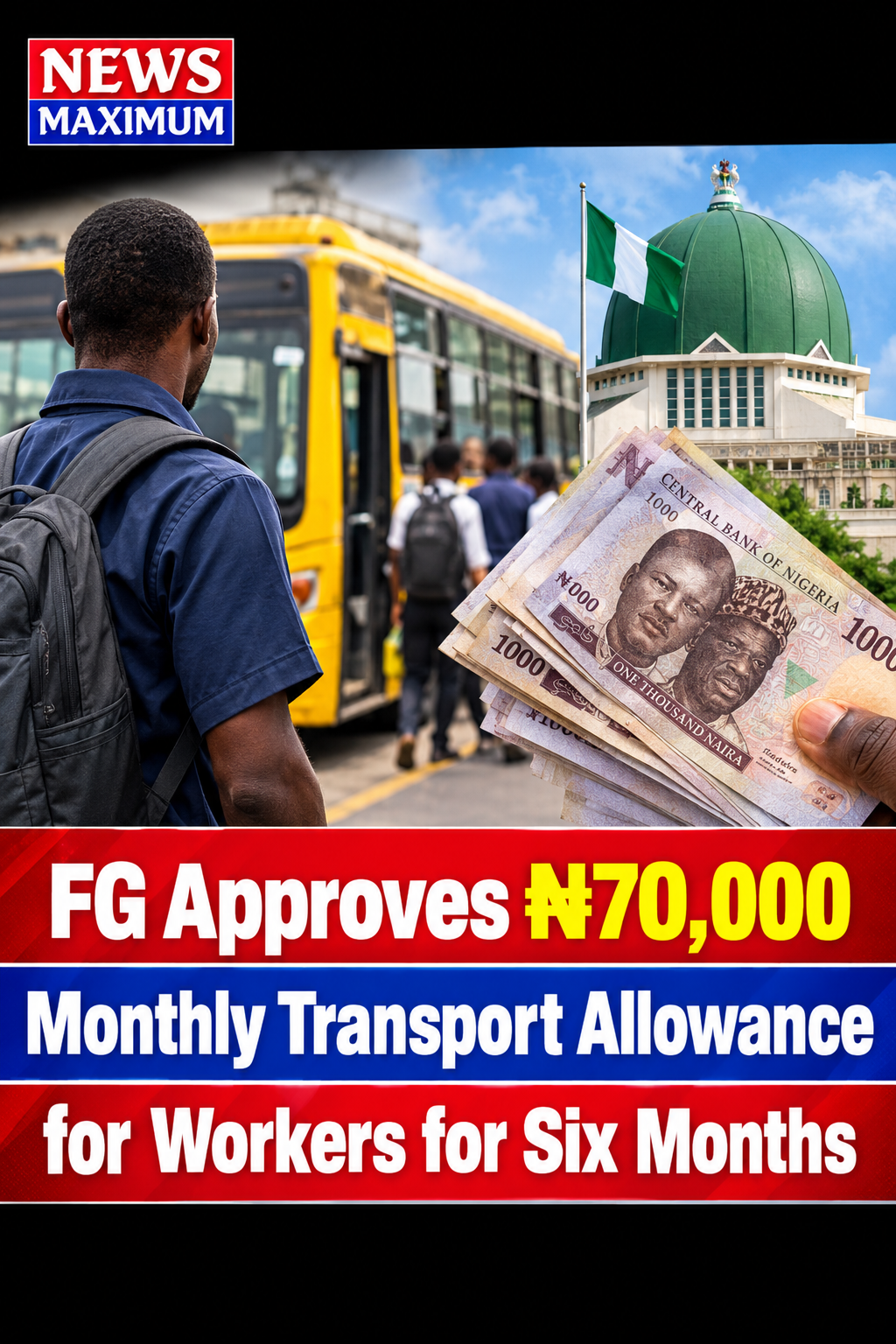
The Federal Government has agreed to pay public service workers a monthly transport allowance of ₦70,000 for six months, beginning in November 2026, following negotiations with the Nigeria Labour Congress (NLC).
The agreement was reached at a conciliation meeting convened by the Federal Ministry of Labour and Employment in Abuja on Tuesday, October 27, to address workers’ welfare concerns, rising living costs and outstanding labour agreements.
Under the arrangement, eligible workers are expected to receive ₦70,000 monthly throughout the six-month intervention period. This would amount to ₦420,000 per worker over the full period, subject to the applicable eligibility and payment arrangements.
Beyond the transport intervention, the government approved the settlement of outstanding peculiar allowance arrears, effective from May 1, 2026. Payment is scheduled to commence in November and will be made in three equal monthly instalments.
Health workers are also expected to receive 19 months of outstanding allowance arrears within three months, starting in December 2026.
On the proposed adjustment of the Consolidated Health Salary Structure (CONHESS), the National Salaries, Incomes and Wages Commission is expected to complete an assessment of the financial implications within three weeks. The findings will guide the Presidential Committee on Salaries in considering the proposed adjustment.
The meeting also addressed hazard allowances for agricultural officers. The Federal Ministry of Agriculture and Food Security has submitted the list of beneficiaries and the associated costs to the commission for verification. The verification is expected to be completed within two weeks, after which an implementation template will be issued.
However, the government and organised labour did not reach an agreement on the effective date for implementing the national minimum wage. Both parties agreed to establish a Minimum Wage Negotiation Committee and commence discussions immediately.
The question of tax relief for workers also remains unresolved. According to the meeting’s resolutions, the matter will be referred to the National Economic Council for consideration because of its statutory implications.
The government and labour representatives further urged state and local governments to participate in the welfare intervention within their respective jurisdictions.
Both parties agreed to meet again after one month to review progress on implementing the resolutions and address outstanding issues.
Although the transport allowance offers temporary financial support, its practical impact will depend on the timely commencement of payments and the effective implementation of the other agreed measures.