By Amos Dzege
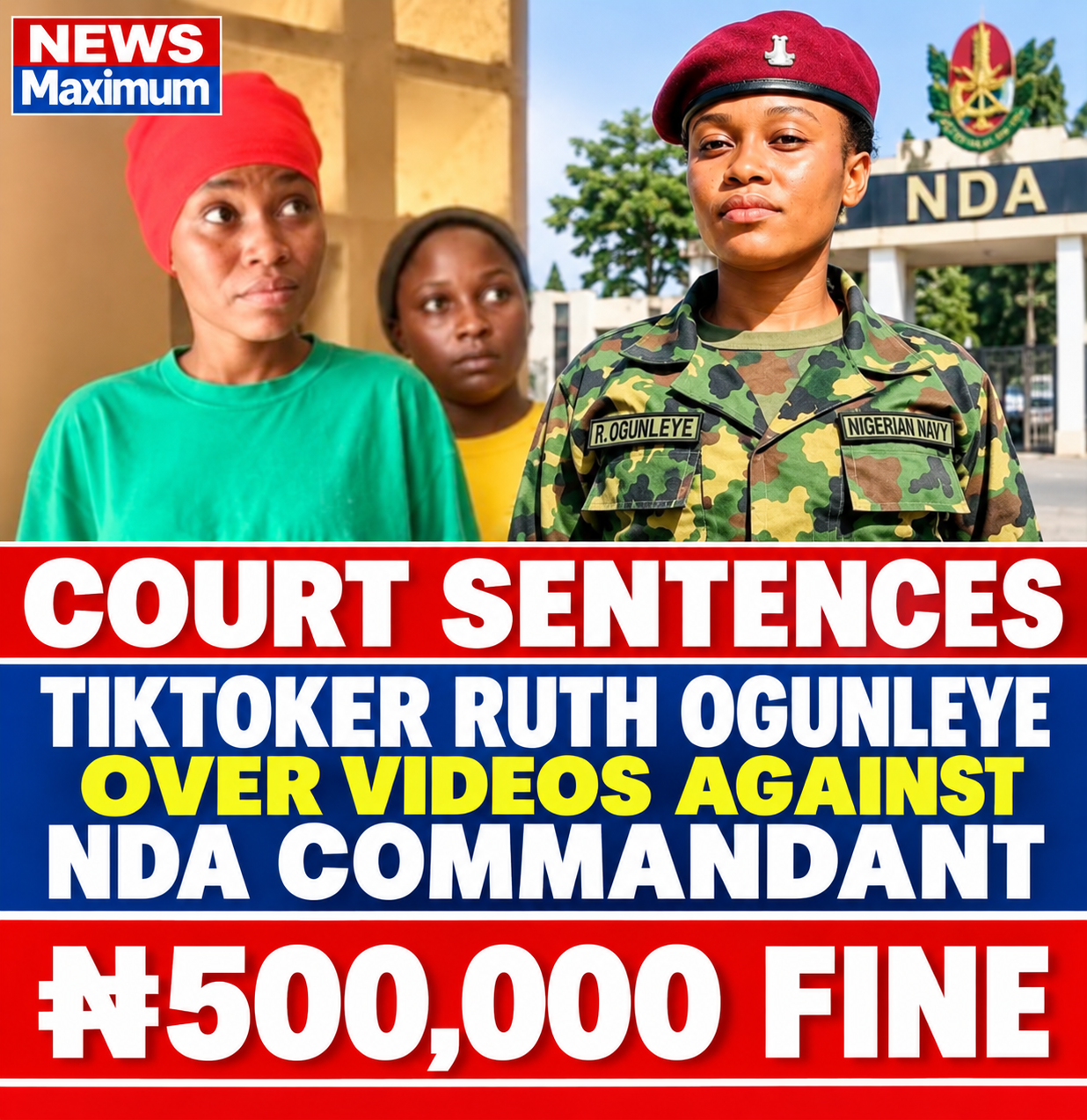
A social media controversy involving a senior military officer has ended in a criminal conviction, with a Federal High Court in Kaduna sentencing former Nigerian soldier and TikTok personality, Ruth Ogunleye, to two years’ imprisonment for defamatory publications against the Commandant of the Nigerian Defence Academy (NDA), Major General Oluyemi Thomas Olatoye.
Although the court imposed a custodial sentence, Ogunleye will not immediately serve the prison term, as the presiding judge suspended the sentence for three years under a plea bargain arrangement. She was also ordered to pay a total fine of ₦500,000 and publish a public apology in two national newspapers within 14 days.
The judgment was delivered on Tuesday, November 10, 2026, by Justice Rilwanu Aikawa of Court One, Federal High Court, Kaduna Judicial Division, following an agreement reached between the defendant and the prosecution under Section 270 of the Administration of Criminal Justice Act (ACJA), 2015.
Ogunleye was initially brought before the court on a five-count charge instituted by the Inspector-General of Police, Olatunji Rilwan Disu, over videos allegedly circulated through her TikTok account, @ogunleyeruthsavage, on or about August 14, 2026.
The prosecution accused her of deliberately publishing and transmitting statements about Major General Olatoye which it described as false and damaging to the military officer’s reputation.
Among the publications identified in the charges was a video carrying the caption, “Maj General Yemi Olatoye is responsible for my death,” in which the defendant allegedly displayed the senior officer’s photograph.
Another video reportedly contained the statement, “I go post your oga own too, your oga own dey my phone,” alongside remarks concerning the NDA commandant.
The prosecution also raised allegations relating to claims that Ogunleye possessed intimate photographs of the senior military officer and threatened to release materials concerning him.
The charges were brought under Section 24(1)(b) of the Cybercrimes (Prohibition, Prevention, etc.) Act 2015, as amended in 2024.
However, the case took a different direction after the defendant and the prosecution entered negotiations to resolve the matter through a plea bargain rather than proceed with a full trial.
Under the agreement, Ogunleye pleaded guilty to Counts One and Two, while the prosecution agreed to withdraw the remaining three counts following her conviction.
Justice Aikawa subsequently sentenced her to one year in prison on each of the two counts. The sentences are to run concurrently, meaning the total custodial punishment is two years rather than two separate consecutive terms.
The court also imposed a fine of ₦250,000 on each count, bringing the total financial penalty to ₦500,000, payable in favour of the Federal Republic of Nigeria.
However, the judge suspended the two-year custodial sentence for three years, giving Ogunleye an opportunity to demonstrate remorse and comply with the conditions contained in the plea bargain agreement.
The conditions include publishing a public apology in two national daily newspapers within 14 days of sentencing. The apology must be in a form approved by counsel to the nominal complainant.
She is also required to refrain from making further publications concerning the NDA commandant and must comply with the restrictions agreed upon by both parties.
The arrangement further provides that any breach of the conditions during the suspension period could expose her to the suspended prison sentence, subject to the court’s determination of the violation.
The prosecution’s case was instituted by the office of the Inspector-General of Police, while the proceedings were handled at the Federal High Court in Kaduna.
The outcome brings the five-count criminal proceedings to a negotiated conclusion, with Ogunleye’s guilty plea to two counts forming the basis of her conviction and sentence.
The ruling also underscores the potential legal consequences of publishing allegations about individuals on social media, particularly where prosecutors establish that the publications fall within the provisions of the law against unlawful and defamatory electronic communications.