By Amos Dzege
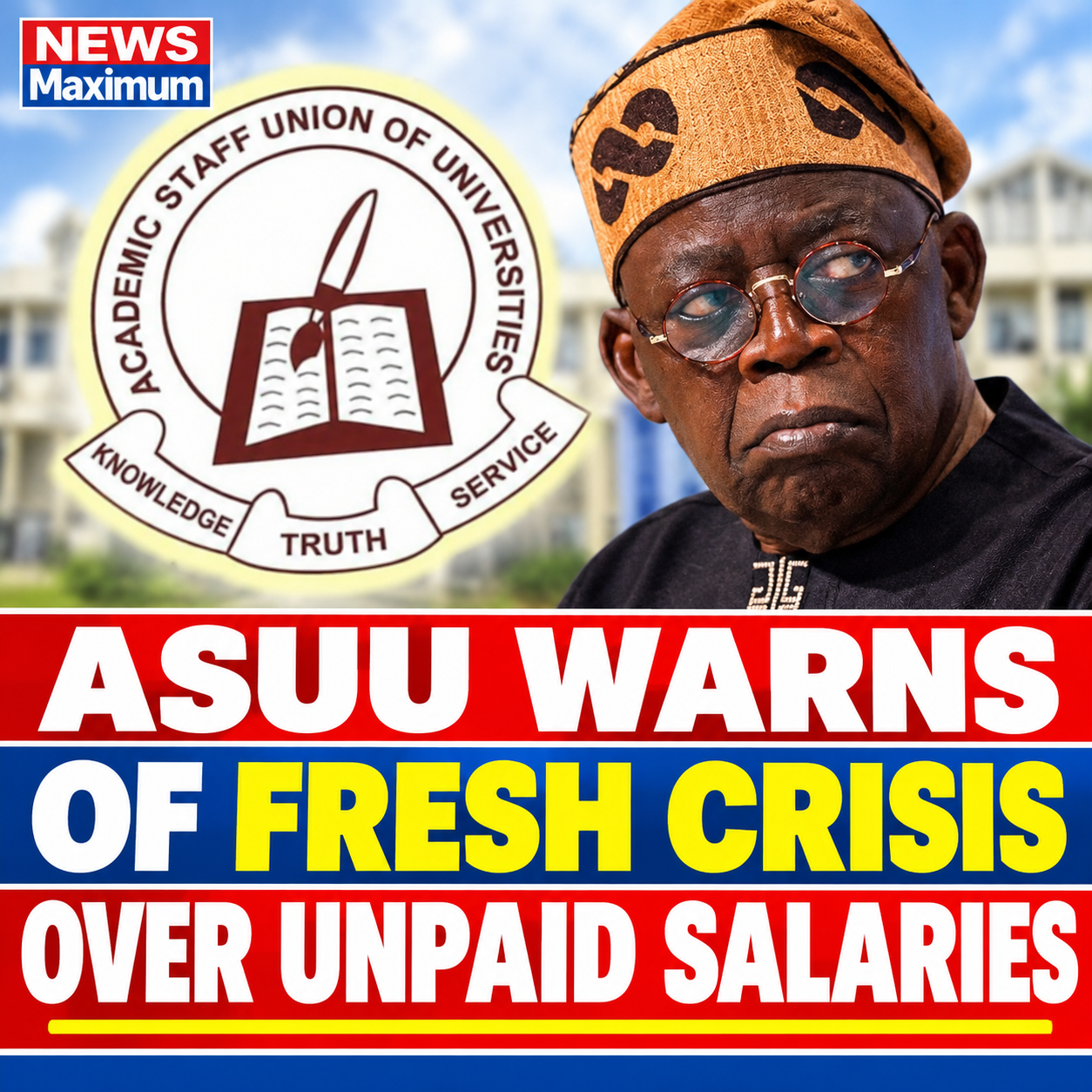
Nigeria’s public university system could face renewed industrial tension following a fresh warning from the Academic Staff Union of Universities (ASUU) over the Federal Government’s continued withholding of part of its members’ salaries arising from the 2022 nationwide strike.
The lecturers’ union has expressed dissatisfaction with the government’s failure to release the outstanding payments, insisting that the prolonged delay is creating unnecessary resentment among academic staff and could undermine the relative stability that universities have struggled to maintain.
In a renewed appeal to President Bola Ahmed Tinubu, ASUU demanded the immediate payment of three-and-a-half months’ outstanding salaries, arguing that lecturers should not continue to suffer financial consequences after making significant sacrifices to restore academic activities following the industrial dispute.
The union’s position was contained in a statement signed by its National President, Professor Chris Piwuna, on Thursday, November 19, 2026. The statement followed resolutions reached at the union’s National Executive Council meeting held on November 13 and 14 at the University of Abuja.
ASUU explained that the Federal Government, under former President Muhammadu Buhari, withheld seven-and-a-half months’ salaries from its members during the 2022 industrial action. Although four months’ arrears were subsequently paid, the remaining three-and-a-half months have yet to be released.
The union described the outstanding payment as an unfair treatment of university lecturers, warning that allowing the dispute to persist could create another major confrontation between academic staff and the Federal Government.
It also recalled that Tinubu had intervened in the disagreement before the 2023 presidential election, raising expectations among lecturers that the withheld salaries would eventually be released if he assumed office.
However, ASUU expressed disappointment that the matter remained unresolved more than three years into his administration, despite the hopes generated by his earlier intervention.
The union further alleged that its discussions with the President’s Chief of Staff, Femi Gbajabiamila, over the outstanding payments did not produce the desired outcome. According to ASUU, Gbajabiamila had informed its representatives that the Federal Government was not prepared to pay the withheld salaries in full.
It also accused the Minister of Education, Dr Tunji Alausa, of maintaining the government’s position, while claiming that its attempts to secure a direct meeting with President Tinubu had not been successful.
Beyond the unpaid strike-related salaries, ASUU raised concerns about other outstanding financial entitlements affecting its members, including salary shortfalls, third-party deductions and promotion arrears. It argued that lecturers had endured prolonged delays in receiving legitimate payments without compensation for the financial losses associated with the waiting period.
The union also challenged the government’s application of the No Work, No Pay policy, questioning why lecturers should face financial penalties for participating in industrial action when, according to the union, the government itself had delayed payments owed to academic staff for extended periods.
ASUU maintained that its members made considerable efforts to prevent the 2022 dispute from causing lasting damage to students’ academic progress. It said lecturers sacrificed their annual and research leaves and increased their workload to recover lost academic time, complete outstanding programmes and help affected students graduate without further delays.
According to the union, these efforts came with significant personal and professional consequences for lecturers, including risks to their health, career advancement and family responsibilities.
The union therefore urged the Tinubu administration to recognise those sacrifices and resolve the outstanding financial dispute instead of allowing it to become another source of confrontation within the university system.
ASUU also rejected political assurances and slogans suggesting that further strikes could be prevented without addressing the underlying grievances of university workers. It insisted that maintaining industrial harmony requires the government to honour its financial obligations and respect agreements reached with lecturers.
The latest warning has brought renewed attention to the longstanding disagreements between university lecturers and successive Nigerian administrations over remuneration, working conditions, funding and the implementation of agreements.
Although ASUU has warned of the possibility of a bigger crisis, its latest statement centres on the demand for payment of the outstanding salaries. It does not amount to an announcement of a new nationwide strike.
The union’s immediate demand is for President Tinubu to intervene and ensure that the remaining three-and-a-half months’ salaries are released without further delay, stressing that resolving the matter would help protect industrial peace and prevent another avoidable disruption in the country’s public university system.