


By Amos Dzege
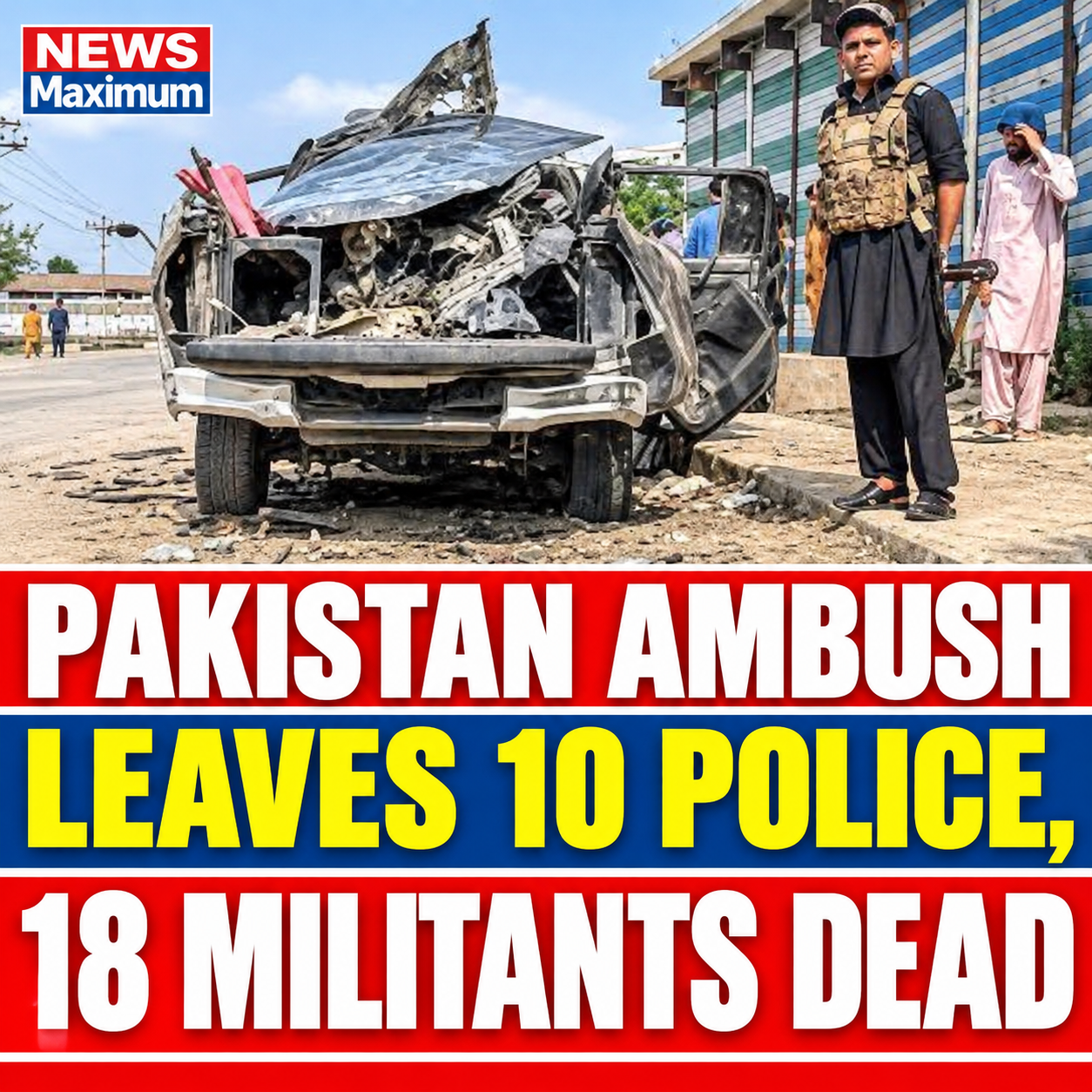
At least 28 people, including 10 police officers and 18 suspected militants, have been killed following a deadly ambush on security personnel in northwestern Pakistan, in an attack that has intensified concerns over the worsening security situation in the country’s troubled border region.
The incident occurred on Wednesday, November 11, 2026, in the Darbukach area of Kohat district, within Khyber Pakhtunkhwa province, where armed men attacked a police convoy returning from an operation targeting illegal gold mining activities. The assault triggered an intense exchange of gunfire that continued for several hours, leaving several security personnel dead and others wounded.
According to police accounts, the officers had been deployed alongside local administrative authorities to carry out an operation against illegal mining activities in the Gumbat area of Kohat. However, as the team was returning from the operation at approximately 1:00 p.m. local time, gunmen positioned on nearby hills opened fire on the convoy, catching the personnel in a deadly attack.
The confrontation quickly escalated into a fierce gun battle as police officers attempted to repel the attackers. Authorities said 10 police personnel were killed during the fighting, including Deputy Superintendent of Police Haider Zaman and Sub-Inspector Mukhtiar. Initial reports say 12 police personnel were injured and taken to hospital for emergency medical treatment.
The provincial police authorities subsequently reported that 18 militants were killed during the confrontation. The attackers also reportedly set police vehicles ablaze, while additional security personnel were dispatched to the area to reinforce the officers and prevent further attacks.
The scale of the casualties prompted emergency arrangements at the District Headquarters Teaching Hospital in Kohat, where medical personnel were mobilised to attend to the injured officers. Security was also tightened across surrounding communities as authorities moved to contain the situation and pursue those responsible.
The Pakistani Taliban, also known as Tehreek-e-Taliban Pakistan (TTP), later claimed responsibility for the assault, according to reports. The group has increasingly targeted security personnel and government installations in different parts of Pakistan, particularly in Khyber Pakhtunkhwa, which shares a border with Afghanistan.
The provincial police described the incident as an attack involving militant elements and criminal networks allegedly connected to illegal mining activities. Authorities maintained that efforts would continue to dismantle the networks responsible for facilitating insecurity and criminal operations in the area.
Khyber Pakhtunkhwa Governor Faisal Karim Kundi condemned the killings, expressing grief over the loss of the police officers and extending condolences to their families. He called for those responsible to be identified and brought to justice, while acknowledging the sacrifices made by security personnel in confronting armed groups.
The latest violence comes amid growing instability in northwestern Pakistan, where attacks against police stations, security patrols and government forces have become a major concern. The Pakistani government has repeatedly accused the TTP of operating from neighbouring Afghanistan, an allegation the Afghan Taliban authorities have denied.
The deteriorating security situation has also contributed to strained relations between Islamabad and Kabul, with Pakistan demanding stronger action against armed groups it says are using Afghan territory to organise attacks.
For residents of Kohat and other communities across Khyber Pakhtunkhwa, Wednesday’s bloodshed represents another reminder of the dangers facing security personnel and civilians in a region struggling with persistent militancy.
With 10 police officers and 18 militants reported dead, the ambush stands as another major setback for Pakistan’s efforts to restore stability in its northwest, raising fresh questions about the ability of security agencies to protect personnel operating in areas vulnerable to armed attack.