By Amos Dzege
Nigeria’s judiciary has begun preparations for the legal battles that may follow the 2027 general elections, with 375 judicial officers selected to serve on Election Petition Tribunals across the country.
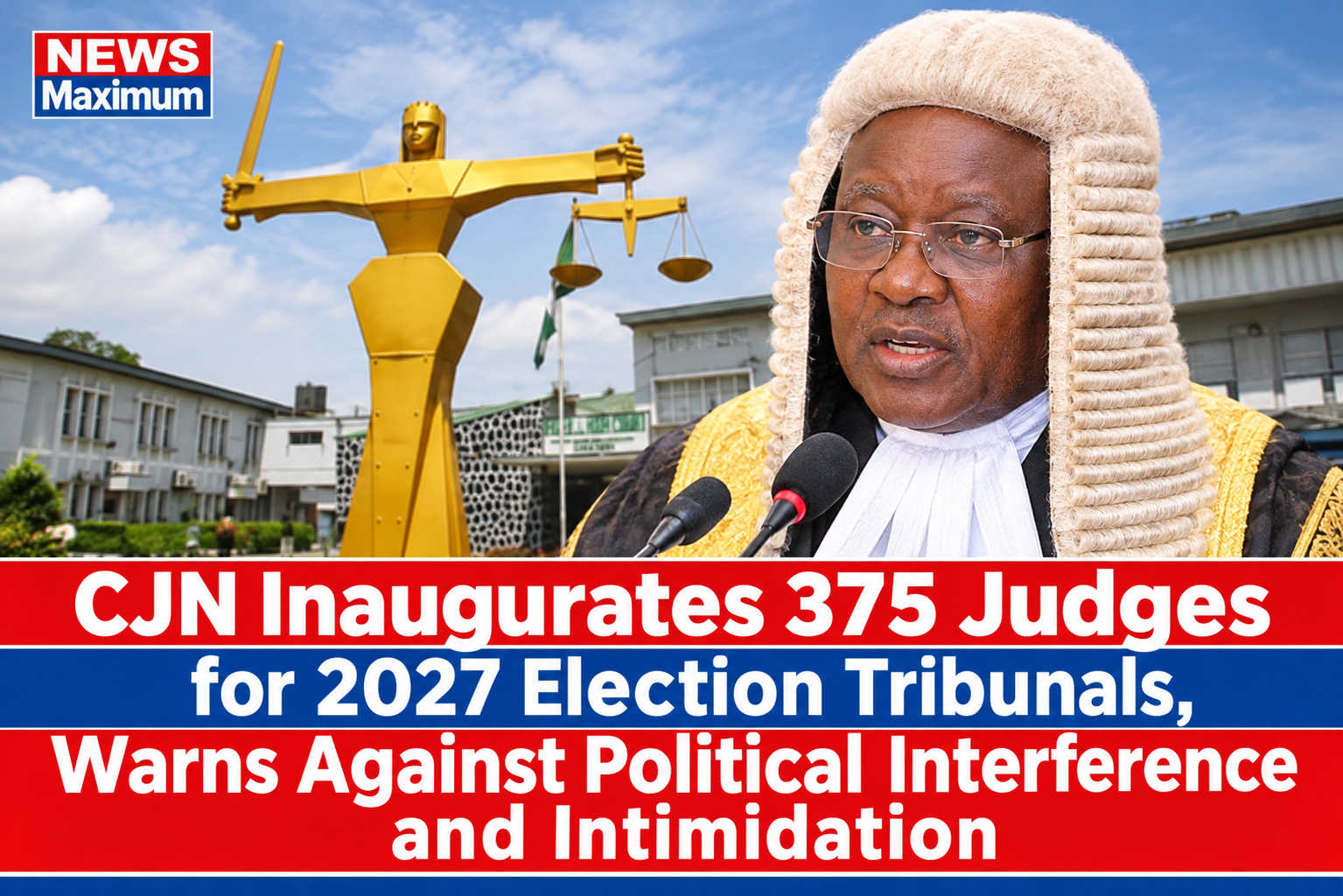
Chief Justice of Nigeria (CJN), Justice Kudirat Kekere-Ekun, inaugurated the judges on Monday, November 9, 2026, charging them to protect the independence of the judiciary and resist attempts by politicians, influential individuals and other interests to interfere with their decisions.
The ceremony, held at the Body of Benchers Complex in Abuja, also featured a three-day capacity-building workshop designed to prepare the judicial officers for the responsibilities and challenges associated with handling election disputes.
Kekere-Ekun reminded the judges that their duty was to determine electoral disputes strictly according to the law and evidence presented before them, rather than political considerations, public pressure or the popularity of candidates involved in the cases.
She acknowledged that election petition proceedings often attract intense political attention but insisted that judicial officers must remain impartial, courageous and faithful to their constitutional responsibilities.
The CJN also warned lawyers, politicians, political parties and social media users against actions capable of undermining the credibility of election petition proceedings. She expressed concern over the abuse of court processes, including multiple cases on similar issues, conflicting court orders and the misuse of ex parte applications to gain political advantages.
She further cautioned against online campaigns, misinformation and attempts to intimidate judges or influence cases that are still before the courts, stressing that public criticism must not become a tool for undermining judicial independence.
Providing details of the selection, President of the Court of Appeal, Justice Monica Dongban-Mensem, disclosed that the 375 nominees comprised 138 judges with previous election tribunal experience and 237 judicial officers who would be serving on the tribunals for the first time.
Dongban-Mensem urged the judges to resist inducements, political pressure and personal interests, while ensuring that election petitions were handled efficiently and within constitutionally prescribed timelines.
The gathering also witnessed the unveiling of the 2026 edition of the Judicial Electoral Manual, which is expected to guide judicial officers in handling election-related cases. The updated document incorporates changes arising from the Electoral Act 2026 and the Election Judicial Proceedings Practice Directions 2026.
Chairman of the Independent National Electoral Commission (INEC), Professor Joash Amupitan, raised concerns about the growing threat of artificial intelligence-generated misinformation, deepfake videos, cloned recordings and manipulated digital communications during elections.
He warned that fabricated materials could be used to impersonate electoral officials, misrepresent election results and create confusion capable of undermining public confidence in the electoral process.
Amupitan urged judges to pay particular attention to the authenticity of electronic evidence, including its digital origin, forensic chain of custody and verification against certified electoral records.
Attorney-General of the Federation and Minister of Justice, Lateef Fagbemi (SAN), also advised the judges to remain independent and ensure that their decisions were not influenced by political interests, media attention or pressure from influential individuals.
Fagbemi warned that compromised electoral judgments could weaken public confidence in the judiciary and threaten democratic stability. He also suggested that additional tribunal panels could be considered in areas expected to experience a high volume of election petitions to prevent delays.
The judicial preparations come ahead of the 2027 general elections, with the presidential and National Assembly elections scheduled for January 16, 2027, while governorship and State Houses of Assembly elections are fixed for February 6, 2027.
Under Nigeria’s electoral dispute resolution framework, presidential election petitions are handled by the Court of Appeal, while governorship and legislative election disputes are determined by the appropriate election petition tribunals, subject to the applicable appeal processes.
With 375 judges selected for the assignment, the judiciary is expected to play a crucial role in resolving disputes that may arise from the forthcoming elections.
Kekere-Ekun urged the judicial officers to remember that their responsibility extends beyond deciding individual cases, stressing that their impartiality, integrity and commitment to the rule of law are essential to protecting public confidence in Nigeria’s democratic institutions.