
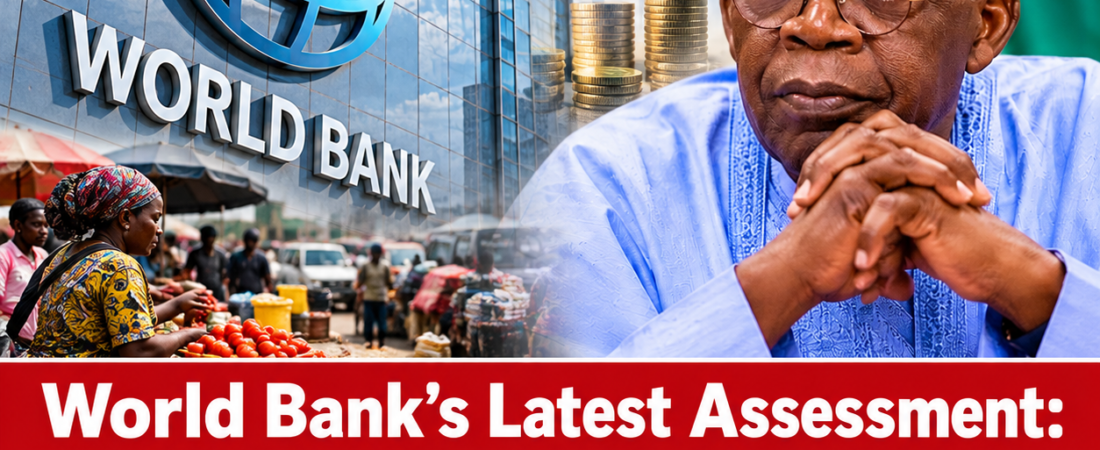
The World Bank’s latest assessment of Nigeria’s economy paints a picture of improving economic growth and rising government revenues, but questions remain about whether ordinary Nigerians are benefiting from the recovery.
In its October 2026 Nigeria Development Update, the World Bank reported that Nigeria’s economy grew by 4.2% in the first half of 2026, compared with 3.9% during the same period in 2025. It also highlighted increased government revenues following economic reforms introduced by President Bola Tinubu’s administration.
Reacting to the report, Tinubu said the findings demonstrated that his economic reforms were delivering results. However, the crucial question is whether these improvements are translating into better living conditions for Nigerians.
The Reality on the Ground
Despite the improving economic indicators, many Nigerian households continue to struggle with the cost of food, transportation, rent, electricity and other essential expenses.
Although inflation has declined from previous highs, slower inflation does not mean prices have returned to affordable levels. It means prices are rising more slowly, while many households are still dealing with the cumulative impact of previous price increases.
For workers whose salaries have not kept pace with the cost of living, everyday expenses can remain difficult to meet. Small businesses also face pressure from energy costs, transportation expenses and weak consumer purchasing power.
The government’s challenge, therefore, is not simply to achieve economic growth but to ensure that the benefits reach households through better employment opportunities, higher real incomes and more affordable essential goods and services.
A Bigger Assessment: Economic Recovery Versus Household Reality
The World Bank’s findings suggest that Nigeria’s economy is showing signs of resilience. However, economic growth alone does not establish that the average Nigerian is better off.
The removal of petrol subsidies and changes to foreign exchange policy have reshaped government finances and the wider economy. Yet the success of these reforms should also be measured by their impact on poverty, jobs, wages, food security and access to healthcare and education.
Increased revenue available to state governments also presents an opportunity to improve public services. Nigerians will reasonably expect to see better roads, functioning hospitals, improved schools and effective social support in return for the resources available to government.
Ultimately, the real test of Tinubu’s economic reforms is whether Nigerians can afford more with their incomes, find decent jobs and enjoy a better standard of living.
Economic indicators may point towards recovery, but the experience of ordinary households remains an essential measure of whether that recovery is translating into meaningful progress.
What do you think? Are Tinubu’s economic reforms improving the lives of ordinary Nigerians, or are the benefits yet to reach the majority? Share your views in the comments.
Source: World Bank, October 2026 Nigeria Development Update.