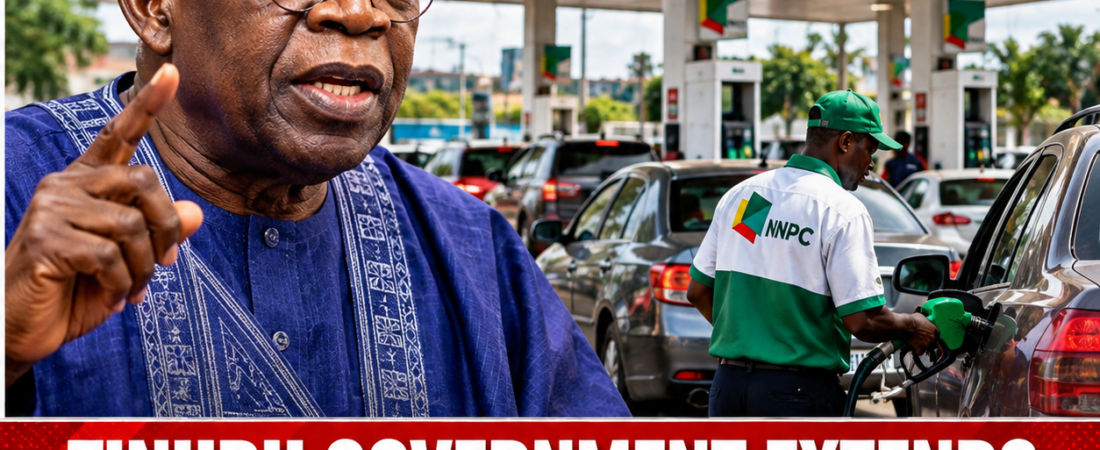
The Federal Government has extended a temporary petrol discount at Nigerian National Petroleum Company Limited (NNPC) retail outlets nationwide, offering motorists some relief amid rising fuel prices and growing pressure on households and businesses.
The NNPC announced that its ₦66-per-litre discount, initially introduced on October 1 to commemorate Nigeria’s 66th Independence Anniversary, would continue until October 31, 2026.
The extension followed renewed efforts by the Federal Government to cushion the impact of elevated global crude oil prices on Nigerians, particularly transport operators, traders and businesses that depend heavily on petrol.
Finance Minister and Coordinating Minister of the Economy, Taiwo Oyedele, had earlier announced that NNPC Retail would offer discounted petrol for 30 days, with priority given to public transport operators.
According to the oil company, the initiative is designed to provide temporary relief to consumers without reversing the government’s market-based petroleum pricing policy.
Discount Does Not Mean Subsidy Has Returned — NNPC
NNPC clarified that the discount should not be interpreted as a return to the petrol subsidy regime, which the Federal Government removed in May 2023.
The company explained that the initiative applied to purchases at its retail outlets and did not establish a uniform petrol price across the country.
It also maintained that petrol prices would continue to reflect prevailing market conditions.
The announcement comes as high fuel costs continue to affect transportation fares, the prices of goods and services, and the operating expenses of businesses across Nigeria.
For many households, petrol prices remain a major concern because of their impact on daily transportation and the cost of running petrol-powered generators.
Will the Discount Make a Difference?
Although the extension offers motorists an opportunity to save money, questions remain about how much relief the measure will provide, particularly for Nigerians who purchase petrol from filling stations outside the NNPC network.
A report by Punch on October 10 also indicated that access to the discount could depend on using the NNPC Fuel App and paying digitally. Checks at outlets in Abuja found petrol selling for ₦1,405 per litre for customers paying directly at the pump, compared with ₦1,339 per litre for those using the application.
This suggests that motorists may need to confirm the payment requirements at participating stations before expecting to receive the discount.
With the promotion scheduled to run until October 31, Nigerians will be watching to see whether the initiative offers meaningful relief from rising fuel costs or whether further measures will be required to ease the economic pressure on households and businesses.
What do you think? Is a ₦66-per-litre petrol discount enough to ease the burden on Nigerians, or should the Federal Government introduce additional measures to reduce the cost of living?